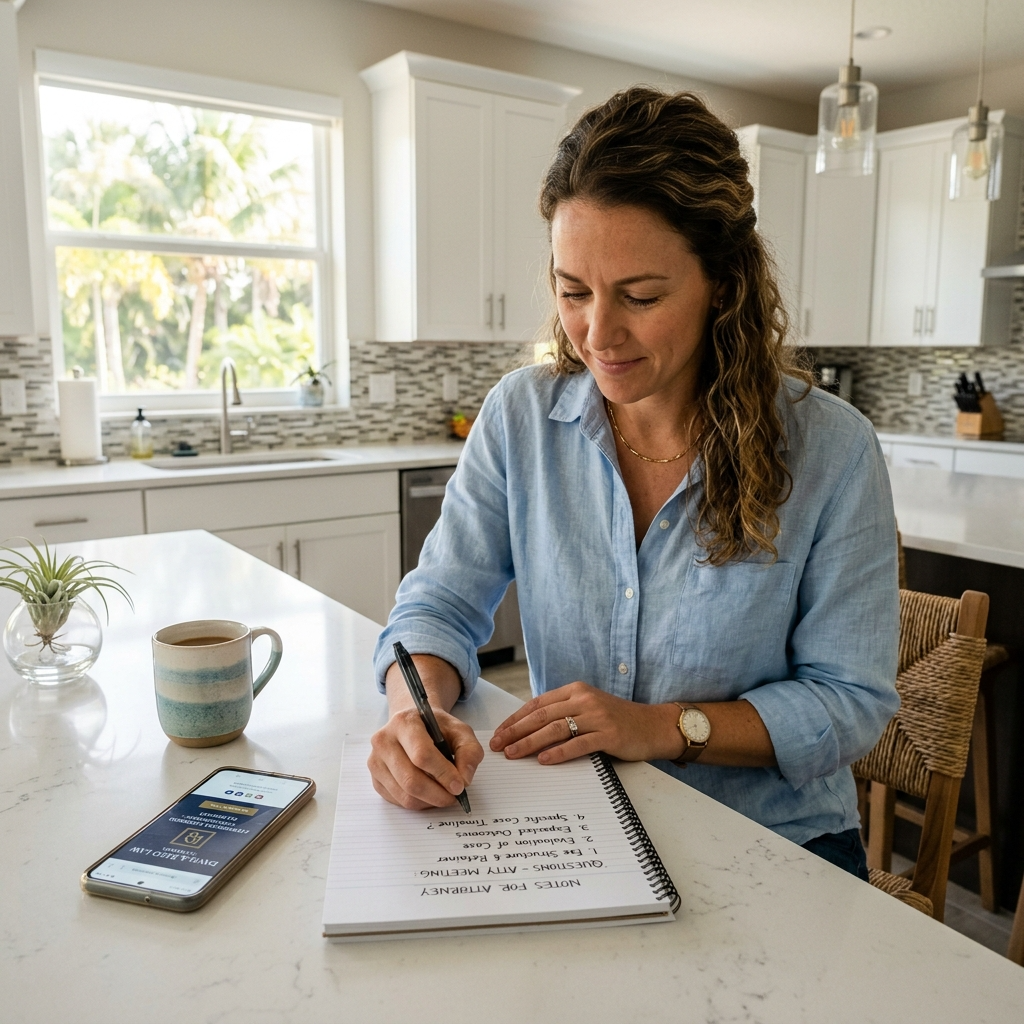
📋 Bring These Documents to Your First Consultation
- The accident or incident report (police report number if available)
- Photos of the accident scene and your injuries
- All medical records and bills received so far
- Any communications from insurance companies (letters, emails, offers)
- Documentation of missed work / income loss
- Contact information for any witnesses
- Your own insurance policy information (declarations page)
- Any recorded statement transcript if you've already given one
1 Have you handled cases like mine before, and what were the outcomes?
Experience in your specific type of case, whether car accidents, slip and falls, or boating accidents, matters significantly. Florida personal injury law has nuances that vary by case type, and an attorney who regularly handles your type of claim will know the relevant precedents, the insurance company tactics specific to your situation, and the realistic range of outcomes.
Good sign: They describe similar cases with specifics about the legal and factual challenges involved (without violating client confidentiality), and they're honest about the range of outcomes rather than just citing their biggest wins.
Watch for: Generic answers that don't engage with your specific case type, or excessive focus on rare landmark verdicts without acknowledging typical outcomes.
2 What do you see as the strengths and weaknesses of my case?
This question separates attorneys who give you an honest assessment from those who are simply trying to sign you as a client. Every case has weaknesses: shared fault, gaps in medical treatment, pre-existing conditions, lack of witnesses. An attorney who doesn't acknowledge any weaknesses in your first meeting is either not listening carefully or not being candid.
Good sign: They identify specific challenges in your case and explain how those challenges can be addressed or managed, and they also identify what's working in your favor.
Watch for: An attorney who says your case is "very strong" or "definitely winnable" without having reviewed all the relevant documentation. Overconfidence at the consultation stage is a red flag.
3 What is your fee structure, and what costs am I responsible for if we don't win?
Florida personal injury attorneys work on contingency, meaning you pay no attorney's fees unless they recover money for you. However, there's an important distinction between attorney's fees and case costs (filing fees, expert witness fees, deposition costs, medical record fees, etc.). Some firms absorb all costs if the case is lost; others advance costs but require repayment regardless of outcome.
Good sign: Clear, direct explanation of the contingency fee percentage (typically 33–40% in Florida, depending on litigation stage), how costs are handled, and what happens financially if the case is unsuccessful.
Watch for: Vague answers about costs, reluctance to put the fee arrangement in writing, or a contingency percentage significantly higher than 40% without clear explanation.
4 Who will actually be handling my case day-to-day?
In many personal injury firms, the attorney you meet at the initial consultation is a senior partner, but your case will primarily be managed by a junior associate or paralegal. This isn't automatically bad, but you deserve to know it upfront. Some clients are comfortable with this structure; others prefer to work directly with the attorney they consulted.
Good sign: Transparency about the case team, including the paralegal's experience, and a clear explanation of how communication flows between you and whoever manages your file.
Watch for: Evasiveness on this question, or a firm where it's difficult to get a direct answer about who your primary point of contact will be.
5 How do you communicate with clients, and how often can I expect updates?
Personal injury cases can take months or years to resolve. Feeling forgotten or out of the loop during that time is one of the most common complaints clients have about their attorneys, and it's avoidable with clear communication expectations set at the outset.
Good sign: The firm has a defined communication protocol, such as monthly updates, milestone-based check-ins, or dedicated paralegal contact, and they're specific about it.
Watch for: "We'll call you when there's something to report" without a proactive communication structure. Cases can go weeks or months without major developments, and if you're only contacted when something happens, you may feel uninformed for extended periods.
6 What is a realistic timeline for resolving my case?
Florida personal injury cases vary enormously in timeline. A straightforward rear-end collision with clear liability and resolved injuries might settle in six to nine months. A disputed liability case with serious injuries can take two to three years, especially if litigation is required. Understanding this range helps you plan financially and emotionally.
Good sign: The attorney explains the key milestones, including completion of medical treatment, the demand package, negotiation period, and potential litigation, and gives an honest range rather than a single optimistic estimate.
Watch for: Either extreme: an attorney who promises a very fast resolution (suggesting they plan to settle quickly regardless of value) or one who is completely unwilling to give any timeline estimate at all.
7 What damages do you believe I can recover in my case?
A good attorney can walk through the categories of damages that are potentially available based on your injuries and circumstances: medical expenses (past and future), lost wages and earning capacity, pain and suffering, emotional distress, and others. They should explain which categories apply to your situation and why, and they should do so without making specific dollar promises.
Good sign: They explain the categories clearly, note what documentation is needed to support each category, and avoid making specific dollar commitments while being able to explain how damages are typically calculated.
Watch for: Attorneys who quote you specific large numbers at the first consultation before reviewing all of your documentation. High estimates at this stage are often a closing tactic rather than a genuine assessment.
8 Do you anticipate this case settling out of court, or might it require litigation?
The vast majority of personal injury cases settle before trial. But an attorney who is unwilling to litigate, or whose firm rarely goes to trial, has less leverage in settlement negotiations. Insurance companies know which attorneys will actually file suit and which ones will ultimately fold. That reputation affects settlement outcomes.
Good sign: The attorney is honest about the likelihood of settlement versus litigation based on the facts of your case, and can speak to their trial experience when relevant.
Watch for: An attorney who categorically assures you the case will settle quickly without addressing litigation as a possibility. Every case that settles does so partly because both parties know trial is the alternative.
9 How does Florida's modified comparative negligence law affect my claim?
Since March 2023, Florida operates under a modified comparative negligence standard, meaning if you are found to be more than 50% at fault for the accident, you cannot recover anything. If you're 30% at fault, your recovery is reduced by 30%. How the attorney handles the issue of comparative fault in your specific case can significantly affect the outcome.
Good sign: They proactively raise this issue (you don't have to; it's a test of whether they do), explain whether comparative fault is a potential issue in your case, and describe how they'd address it through investigation and argument.
Watch for: An attorney who waves this issue away or doesn't demonstrate familiarity with how HB 837 changed Florida's negligence framework. This law is recent and important.
10 Is there anything I should avoid doing or saying from this point forward?
A knowledgeable personal injury attorney will have very practical guidance on this. Social media posts, recorded statements, accepting calls from the at-fault driver's insurer, gaps in medical treatment: all of these can damage a claim. The attorney should brief you on this clearly at the first meeting.
Good sign: Specific, actionable guidance including: don't post about the accident on social media; don't give recorded statements without attorney involvement; don't miss medical appointments; keep records of everything.
Watch for: An attorney who doesn't raise these practical points at the initial consultation. It suggests either inexperience or a superficial engagement with your case.
11 What will you need from me throughout this process?
Your participation matters. An attorney needs timely access to your medical records, prompt responses to their questions, documentation of ongoing expenses, and your attendance at key appointments. Understanding your role upfront avoids friction and keeps the case moving efficiently.
Good sign: They clearly outline your responsibilities and explain why each one matters for the strength of your case.
Watch for: Attorneys who make it sound entirely passive, using phrases like "just leave everything to us." Some client involvement is genuinely important, and downplaying it can lead to case management problems later.
12 What happens if I'm not happy with the progress of my case and want to change attorneys?
You have the right to change attorneys at any time, and this is a fundamental right of any client. Florida Bar rules govern how contingency fee arrangements are handled when an attorney is discharged. The outgoing attorney typically has a lien on any eventual recovery for the value of work already performed.
Good sign: A confident attorney won't be rattled by this question. They'll explain your rights clearly and express confidence that you'll want to stay because of how they handle your case.
Watch for: Any attorney who reacts defensively to this question or makes it seem like changing counsel would be extremely difficult or costly. The attorney-client relationship should be built on trust and performance.
Florida Personal Injury Contingency Fee Structure (General Reference)
Florida Bar rules regulate contingency fees in personal injury cases. The percentages below are common but may vary by firm and case circumstances. Always confirm the exact terms in your specific written fee agreement.
33%
Typical rate if the case settles before a lawsuit is filed
40%
Common rate if a lawsuit is filed and the case proceeds into litigation
$0
Attorney's fee if the case is unsuccessful. That's the core of the contingency model
Note: These percentages apply to attorney's fees only. Case costs (filing fees, expert fees, medical record costs, etc.) are separate and should be addressed explicitly in your fee agreement.
-
🚩 They quote you a specific settlement number at the first meeting
Without full medical records, a complete investigation, and knowledge of the at-fault party's insurance limits, no attorney can accurately tell you what your case is worth. Specific large numbers at the first consultation are almost always a sales technique, not a genuine assessment.
-
🚩 They seem distracted or dismissive of the details you share
The quality of your case depends heavily on details. An attorney who cuts you off, checks their phone, or redirects to generic talking points before fully hearing your account is showing you how they'll engage with your case throughout.
-
🚩 They're vague about who will actually handle your file
You deserve to know whether you're hiring the attorney you're speaking with or being handed off to staff. Some firms operate like intake mills, with impressive senior attorneys at the front and overloaded junior staff in the back. Ask specifically.
-
🚩 They can't clearly explain how Florida's recent tort reform affects your case
Florida's HB 837 (2023) significantly changed the state's comparative negligence rules and reduced the personal injury statute of limitations to two years. An attorney who is not up to date on these changes, or who cannot speak to how they might affect your specific claim, is not current on the law they're being asked to practice.
"A first consultation with a personal injury attorney should feel like a conversation between informed adults, not a sales pitch or a lecture. You're evaluating whether this person understands your case, is honest about its challenges, and has the experience and resources to fight for what you deserve."
Ready for a Consultation That Actually Answers Your Questions?
We believe in honest, direct conversations about your case, including its challenges. Our initial consultations are free, confidential, and focused on giving you the information you need to make an informed decision. No pressure, no promises, no fine print.
Schedule Your Free Consultation
Legal Disclaimer: This article is provided for general educational purposes and does not constitute legal advice. The information about Florida's Personal Injury Protection system, statute of limitations, contingency fees, and comparative negligence law reflects the authors' understanding of the law as of the publication date, which may change. Typical attorney fee percentages described are general references only, and the specific terms of any representation agreement should be reviewed carefully before signing. No attorney-client relationship is formed by reading this content. Please consult a licensed Florida personal injury attorney for advice specific to your situation. This is attorney advertising.